Have you ever dreamed of swimming in crystal-clear, magical pools hidden in the jungle? That’s exactly what cenotes offer visitors to Cancun! These natural swimming holes are one of Mexico’s most amazing treasures, and no trip to Cancun is complete without visiting at least one.
The Yucatan Peninsula is home to over 6,000 cenotes, with about 60 of them located along the famous “Ruta de los Cenotes” (Cenote Route) near Cancun. These natural wonders were formed thousands of years ago and hold both natural beauty and rich history.
In this guide, we’ll explore everything you need to know about cenote tours in Cancun:
- What cenotes are and their different types
- The best cenotes to visit near Cancun
- Tour options and what they include
- Practical tips for your visit
- How to choose the perfect tour for your needs
Ready to dive into the mysterious world of cenotes? Let’s get started! 🏊♂️💦
What Are Cenotes? Understanding Nature’s Swimming Pools
What exactly is a cenote?
A cenote (say: seh-NO-tay) is a natural sinkhole created when limestone bedrock collapses, revealing the groundwater underneath. Think of them as natural swimming pools filled with incredibly clear, fresh water. The word “cenote” comes from the Mayan word “dzonot,” which means “well.”
These amazing natural formations happened because the Yucatan Peninsula is made mostly of limestone, a soft rock that can be slowly dissolved by rainwater. Over thousands of years, this creates underground rivers and caves. Sometimes, the roof of these caves falls in, creating the openings we call cenotes.
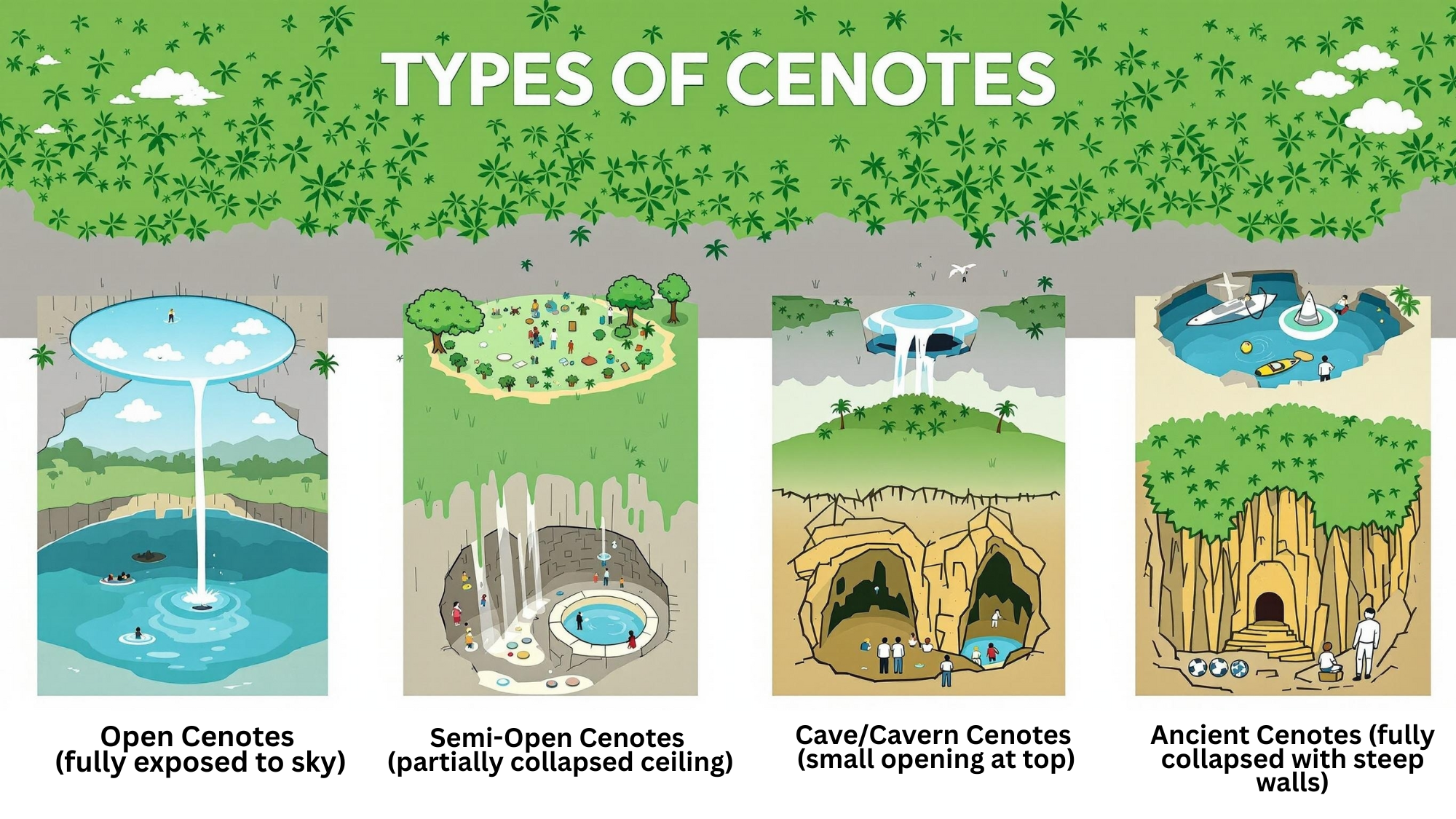
The 4 Types of Cenotes You’ll Find Near Cancun 🌊
Not all cenotes look the same! There are four main types you might visit on your tour:
- Open Cenotes: These look like large, round ponds with completely open tops. They get plenty of sunlight, so the water often appears bright blue or turquoise. Perfect for those who don’t like enclosed spaces!
- Semi-Open Cenotes: These have partial cave roofs, creating a magical mix of sunlight and shadow. They often have stunning light beams shining through openings in the ceiling.
- Cave/Cavern Cenotes: These are mostly enclosed with just a small opening at the top. They’re darker inside but create an amazing atmosphere with stalactites hanging from the ceiling.
- Ancient Cenotes: These are the oldest type, often fully exposed to the sky after their ceilings completely collapsed long ago. They typically have steep vertical walls surrounding the water.
Why Cenotes Were Sacred to the Mayans 🏺
Cenotes weren’t just swimming holes to the ancient Maya people. They believed cenotes were sacred entrances to the underworld (called “Xibalba”). The Maya performed important religious ceremonies at cenotes and sometimes even made offerings to their rain god, Chaac.
Many cenotes contain archaeological treasures from these ancient times, including pottery, jewelry, and other artifacts. Some even contained human remains from sacrificial rituals. Don’t worry though – the cenotes you’ll visit on tours are perfectly safe and focused on natural beauty!
The Top 10 Cenotes Near Cancun Worth Visiting
Want to know which cenotes are truly worth your time? Here are the absolute best cenotes near Cancun that you shouldn’t miss:
1. Cenote Dos Ojos 👁️👁️
Distance from Cancun: About 75 minutes (73 miles/118 km)
Why it’s special: The name means “Two Eyes” because it features two connected cenotes that look like two eyes from above. The water is incredibly clear with a stunning blue color.
Activities: Swimming, snorkeling, scuba diving through cave systems
Facilities: Changing rooms, bathrooms, equipment rental, food vendors
Cost: Around $25 USD for adults
“The visibility underwater at Dos Ojos was absolutely incredible – I could see at least 100 feet ahead of me! The stalactites hanging from the ceiling made me feel like I was exploring another planet.” – Maria, tourist from Spain
2. Gran Cenote
Distance from Cancun: About 90 minutes (80 miles/130 km)
Why it’s special: A large, partially open cenote with crystal clear water and a mix of open areas and cave sections.
Activities: Swimming, snorkeling, turtle watching
Facilities: Lockers, changing rooms, bathrooms, snorkel rental
Cost: Around $18 USD for adults
3. Cenote Ik Kil
Distance from Cancun: About 2.5 hours (110 miles/177 km)
Why it’s special: One of the most photographed cenotes, with vines hanging down from the surface to the water 85 feet below. Often included in Chichen Itza tours.
Activities: Swimming, cliff jumping
Facilities: Restaurant, changing rooms, lockers, gift shop
Cost: Around $10 USD for adults
4. Cenote Azul
Distance from Cancun: About 60 minutes (57 miles/92 km)
Why it’s special: An open cenote with shallow areas perfect for families and deeper sections for diving and jumping.
Activities: Swimming, cliff jumping, snorkeling
Facilities: Basic bathrooms, small snack shop
Cost: Around $7 USD for adults
5. Cenote Suytun
Distance from Cancun: About 2 hours (93 miles/150 km)
Why it’s special: Features a stone platform in the middle that creates perfect photo opportunities when light beams shine through the ceiling.
Activities: Swimming, photography
Facilities: Changing rooms, bathrooms
Cost: Around $10 USD for adults
6. Cenote La Noria
Distance from Cancun: About 40 minutes (26 miles/42 km)
Why it’s special: A less crowded underground cavern with huge stalactites and crystal-clear water.
Activities: Swimming, photography
Facilities: Basic restrooms
Cost: Around $5 USD for adults
7. Cenote Chaak Tun
Distance from Cancun: About 50 minutes (45 miles/72 km)
Why it’s special: A cave cenote with dramatic lighting and impressive rock formations.
Activities: Swimming, guided tours
Facilities: Life jackets provided, changing rooms
Cost: Around $15 USD for adults (includes guide and equipment)
8. Cenote Jardin del Eden
Distance from Cancun: About 60 minutes (55 miles/89 km)
Why it’s special: Large open cenote with cliff jumping spots and areas to relax.
Activities: Swimming, cliff jumping, snorkeling
Facilities: Bathrooms, small restaurant
Cost: Around $10 USD for adults
9. Cenote Zapote
Distance from Cancun: About 60 minutes (43 miles/70 km)
Why it’s special: Features unusual “Hell’s Bells” formations underwater (bell-shaped rocks).
Activities: Swimming, ziplining, diving
Facilities: Restaurant, changing rooms
Cost: Around $30 USD for full adventure park access
10. Cenote Oxman
Distance from Cancun: About 2 hours (100 miles/160 km)
Why it’s special: Less crowded with a rope swing and beautiful vine-covered opening.
Activities: Swimming, rope swinging
Facilities: Restaurant at nearby hacienda, changing rooms
Cost: Around $7 USD for adults
Comparing Cenote Tour Options in Cancun
When planning your cenote adventure, you have several different tour options. Let’s break them down so you can find the perfect fit! 🧐
Guided Tour vs. Self-Guided Exploration
Guided Tours:
- ✅ Transportation provided from your hotel
- ✅ All entrance fees included
- ✅ Equipment often provided
- ✅ Expert guide shares history and information
- ✅ Lunch usually included
- ❌ Fixed schedule with limited time at each location
- ❌ Higher cost overall
Self-Guided:
- ✅ Flexible timing – stay as long as you want
- ✅ Choose exactly which cenotes to visit
- ✅ Often cheaper overall
- ✅ More privacy and freedom
- ❌ Need to arrange your own transportation
- ❌ Must bring or rent your own equipment
- ❌ No expert guide to share information
For first-time visitors, I recommend a guided tour. It removes all the stress of planning and transportation while ensuring you see the best cenotes with proper equipment.
Full-Day vs. Half-Day Tours
Full-Day Tours (6-10 hours):
- Visit 2-4 cenotes
- Often include lunch
- May combine with other attractions
- Cost: $80-150 USD per person
Half-Day Tours (3-5 hours):
- Visit 1-2 cenotes
- Usually no meals included
- More time at your resort
- Cost: $40-80 USD per person
If this is your first trip to Cancun and you’re short on time, a half-day tour gives you a good taste of the cenote experience while leaving time for beach activities.
Tour Combinations: More Bang for Your Buck 💵
Many tours combine cenotes with other popular attractions:
- Cenotes + Chichen Itza: Visit the famous Mayan pyramid and cool off at Cenote Ik Kil afterward.
- Cenotes + Tulum Ruins: Explore coastal Mayan ruins and then swim in nearby cenotes.
- Adventure Tours: Combine cenote swimming with ziplines, ATV rides, and jungle experiences.
These combination tours offer great value but mean less time at each stop. Choose based on your main interests!
Most Popular Cenote Tour Packages from Cancun
Here are the most popular cenote tour options that visitors love:
1. Xenotes Tour by Xcaret
What’s included: Visits to 4 different types of cenotes, transportation, equipment, breakfast, lunch, drinks, professional guides
Activities: Kayaking, ziplines, cliff jumping, rappelling, swimming
Duration: Full day (8-9 hours)
Price: Around $120-140 USD per adult
Best for: Adventure seekers wanting to experience all cenote types in one day
2. Ruta de los Cenotes (Puerto Morelos)
What’s included: Transportation, visits to 3-4 cenotes along the famous “Cenote Route”
Activities: Swimming, snorkeling, some ziplines
Duration: Full day (7-8 hours)
Price: Around $70-90 USD per adult
Best for: Those wanting to explore less crowded, more natural cenotes
3. Dos Ojos and Gran Cenote Tour
What’s included: Transportation, entrance fees, snorkel equipment, guide
Activities: Swimming, snorkeling, cave exploration
Duration: Half day (5-6 hours)
Price: Around $80-100 USD per adult
Best for: Snorkeling enthusiasts and photographers
4. Chichen Itza and Cenote Ik Kil
What’s included: Transportation, entrance fees, guide, lunch, visit to Valladolid town
Activities: Cultural tour, swimming, history exploration
Duration: Full day (12 hours)
Price: Around $60-80 USD per adult
Best for: History lovers who also want to swim
5. ATV Jungle and Cenote Adventure
What’s included: ATV rental, protective gear, cenote entrance, guide
Activities: ATV driving through jungle trails, swimming in cenotes, ziplines
Duration: Half day (4-5 hours)
Price: Around $80-100 USD per adult
Best for: Thrill-seekers wanting to combine action with cooling off
Practical Tips for Visiting Cenotes
Want to make the most of your cenote visit? Here are essential tips I’ve learned from multiple cenote trips: 🌟
What to Bring ✅
- Quick-dry towel: Regular towels stay wet and heavy
- Water shoes: Protect your feet on rocky surfaces
- Biodegradable sunscreen only: Regular sunscreen harms the ecosystem
- Waterproof camera or phone case: You’ll want photos!
- Cash: Many cenotes don’t accept cards
- Drinking water: Stay hydrated
- Change of clothes: For the ride back
- Small waterproof bag: For valuables
What to Leave Behind ❌
- Regular sunscreen: Contains chemicals that harm cenote ecosystems
- Jewelry: Easy to lose in water
- Expensive electronics: Unless waterproof
- Heavy bags: Storage may be limited
Best Times to Visit
- Early morning (8-10 AM): Fewest crowds, best light for photos
- Weekdays: Less crowded than weekends
- Dry season (November-April): Clearest water conditions
Photography Tips 📸
- Use underwater mode if your camera has it
- Bring a GoPro or underwater camera for best results
- Morning light creates the best beams in cave cenotes
- Ask guides about the best photo spots
Safety Considerations
- Always wear a life jacket if you’re not a strong swimmer
- Follow all guide instructions
- Don’t dive headfirst (water depth varies)
- Watch your step on wet, slippery surfaces
- Never swim in closed-off areas
- Don’t touch stalactites or stalagmites
Insider Tips for the Perfect Cenote Experience
Want to experience cenotes like a local? Here are some insider tips you won’t find in most guidebooks:
How to Avoid Crowds 🕵️♀️
- Visit early in the morning (before 10 AM) or late afternoon (after 3 PM)
- Choose less famous cenotes – often just as beautiful but much less crowded
- Visit on weekdays rather than weekends
- Avoid days when cruise ships are in port (check cruise schedules online)
Secret Spots Worth Finding
- Cenote Calavera: Near Tulum, this “Temple of Doom” cenote features a cool skull-like appearance from above with three holes
- Cenote X’Canche: Near the ruins of Ek Balam, this hidden gem requires a short bike or hike through the jungle
- Cenote Zaci: Right in the center of Valladolid town, often overlooked by tourists
- Cenote Sac Actun: Part of the world’s longest underwater cave system, less visited than nearby options
Local Knowledge
- Water is usually cooler in the morning and warmer in the afternoon
- Fish in cenotes can give natural “pedicures” if you sit still (ticklish but fun!)
- Some cenotes change color depending on the time of day and sunlight
- Locals often bring bread to feed the fish
- Ask tour guides about the Mayan legends associated with specific cenotes
Cenote Tours for Different Travelers
Not all travelers want the same experience! Here’s how to choose based on what matters to you:
For Families with Children 👨👩👧👦
Best cenotes: Cenote Azul, Gran Cenote, Cenote Cristalino
Why: Shallow areas, easier access, basic facilities
Tour recommendation: Half-day tours with 1-2 cenotes, avoiding extreme adventure activities
For Adventure Seekers 🧗♂️
Best cenotes: Dos Ojos, Cenote Zapote, Cenote Ik Kil
Why: Cliff jumping, ziplines, deeper water, cave diving
Tour recommendation: Xenotes Tour or adventure packages with ATVs and ziplines
For Photographers 📷
Best cenotes: Cenote Suytun, Cenote Samula, Oxman
Why: Dramatic light beams, unique formations, Instagram-worthy settings
Tour recommendation: Early morning private tours for optimal lighting and fewer crowds
For Those with Limited Mobility ♿
Best cenotes: Cenote Azul, parts of Gran Cenote
Why: Easier access, platforms, fewer stairs
Tour recommendation: Private tours that can accommodate specific needs and pace
Budget-Friendly Options 💰
Best cenotes: Cenote Zaci, Cenote Oxman, Cenote La Noria
Why: Lower entrance fees, accessible by public transportation
Tour recommendation: Group tours to multiple cenotes or DIY with public transport
Transportation Options to Cenotes from Cancun
How do you actually get to these amazing natural pools? Let’s look at your options:
Tour Bus/Shuttle Services
- How it works: Pickup from your hotel, transportation to cenotes, return to hotel
- Cost: Included in tour price (typically $60-140 USD total)
- Pros: Convenient, no planning needed, guide included
- Cons: Fixed schedule, limited time at each location
Private Transportation
- How it works: Private vehicle with driver just for your group
- Cost: $150-300 USD per day depending on vehicle size
- Pros: Flexible schedule, customizable stops, comfort
- Cons: Expensive, still need to pay entrance fees separately
Rental Car
- How it works: Rent a car in Cancun and drive yourself
- Cost: $40-70 USD per day plus gas
- Pros: Complete freedom and flexibility, most economical for groups
- Cons: Navigation can be challenging, parking fees, need to be comfortable driving in Mexico
Taxi/Rideshare
- How it works: Take a taxi or Uber to cenotes
- Cost: $80-120 USD round trip depending on distance
- Pros: Direct transportation without rental responsibility
- Cons: Need to arrange return pickup, expensive for single cenotes
Public Transportation
- How it works: Take public buses to towns near cenotes, then local taxis
- Cost: $5-15 USD each way plus local taxi ($5-10)
- Pros: Very economical, authentic experience
- Cons: Time-consuming, language barrier possible, limited schedules
For most visitors, especially first-timers, organized tours provide the best balance of convenience, value, and experience. If you’re more adventurous or staying longer, rental cars offer the most flexibility.
What to Expect on Your Cenote Tour
Wondering what a typical cenote tour day looks like? Here’s what to expect:
Sample Tour Schedule
- 7:30-8:30 AM: Hotel pickup
- 9:30-10:30 AM: Arrival at first cenote, safety briefing
- 10:30 AM-12:00 PM: Swimming and activities at first cenote
- 12:00-1:00 PM: Lunch (usually included on full-day tours)
- 1:30-3:00 PM: Second cenote visit
- 3:30-4:30 PM: Optional third cenote or return journey
- 5:00-6:00 PM: Return to hotel
Food and Drinks 🥪
- Most full-day tours include lunch (usually buffet style or boxed lunch)
- Vegetarian options are typically available if requested in advance
- Water is usually provided, but bring extra
- Some tours include beer or soft drinks
Guides and Instruction
- Guides usually speak English and Spanish
- They’ll provide:
- Safety instructions
- Historical and geological information
- Photography tips
- Activity guidance (snorkeling, ziplines, etc.)
Equipment Provided vs. What to Bring
Usually provided:
- Life jackets
- Basic snorkel gear (mask and tube)
- Helmets (for adventure activities)
- Lockers (sometimes for a small fee)
You should bring:
- Swimwear (already worn under clothes saves time)
- Towel
- Water shoes
- Biodegradable sunscreen
- Cash for souvenirs or extras
- Water bottle
Environmental Conservation and Sustainable Tourism
Cenotes aren’t just beautiful – they’re fragile ecosystems that need protection. Here’s why conservation matters and how you can help:
The Ecological Importance of Cenotes 🌱
- Cenotes are part of the world’s largest underground river system
- They provide habitats for unique fish, plants, and microscopic life
- They’re the main freshwater source in the Yucatan Peninsula
- Many are connected to each other through underground rivers
How Tourism Affects Cenotes
- Regular sunscreen chemicals kill microorganisms and harm water quality
- Too many visitors can damage stalactites and stalagmites
- Improper waste disposal threatens water purity
- Development around cenotes can disrupt natural water flow
How Tour Companies Are Helping
- Requiring biodegradable sunscreen
- Limiting daily visitor numbers
- Mandatory shower before entering
- Supporting local conservation groups
- Setting aside restoration days when cenotes are closed to visitors
How You Can Help Preserve Cenotes
- Use only biodegradable sunscreen (or none in cave cenotes)
- Shower before entering
- Never touch rock formations
- Stay on marked paths
- Don’t feed wildlife
- Take all trash with you
- Choose tour companies with good environmental practices
By being a responsible visitor, you help ensure these natural wonders will be around for generations to come!
Frequently Asked Questions About Cenote Tours
Still have questions? Here are answers to the most common cenote tour questions:
Are cenotes safe to swim in?
Yes! Cenotes are generally very safe for swimming. Most tour operators provide life jackets, and guides ensure your safety. The water is usually very clear, making it easy to see underwater.
Do I need to know how to swim?
Not necessarily. Many cenotes offer life jackets (sometimes mandatory), and some have shallow areas where you can stand. Let your tour operator know if you’re not a strong swimmer.
Are there dangerous animals in cenotes?
No dangerous animals live in cenotes. You might see small fish, but they’re harmless and often considered a highlight of the experience!
What’s the water temperature like?
Cenote water is refreshingly cool, usually around 75°F (24°C). This feels wonderful on hot days but can be a bit chilly initially.
Can children visit cenotes?
Absolutely! Many cenotes are family-friendly. Look for tours that specifically welcome children and cenotes with shallow areas.
What if it rains on tour day?
Rain usually doesn’t affect cenote tours – you’re going to get wet anyway! In fact, watching raindrops hit the cenote surface can be beautiful. Tours only cancel for severe weather.
How deep are cenotes?
Depth varies greatly. Some areas are shallow enough to stand (3-4 feet), while others can be over 100 feet deep! Don’t worry – deep areas are clearly marked.
Are bathrooms available at cenotes?
Most cenotes visited by tours have basic bathroom facilities. Some have changing rooms too, but they might be simple.
Will I see the iconic light beams shown in photos?
Light beams are most common in cave or semi-open cenotes, and they’re best seen mid-morning on sunny days. Ask your guide about the best times and spots.
Real Visitor Experiences
Don’t just take my word for it – here’s what real travelers say about their cenote experiences:
“The Xenotes Tour was the highlight of our Cancun trip! Getting to try four different cenotes in one day was amazing – each one had a completely different feel. The zipline into the water was definitely my favorite part!” – James from Chicago
“We took our kids (ages 6 and 9) to Gran Cenote and they absolutely loved it! The water was so clear they could see fish without even putting their faces in the water. Definitely bring water shoes though – the rocks can be slippery.” – Sarah from Toronto
“We rented a car and visited cenotes on our own. It was an adventure finding them, but we saved money and could stay as long as we wanted. Dos Ojos was definitely worth the drive – the cave formations were incredible.” – Miguel from Madrid
“I’m not a strong swimmer, so I was nervous about visiting cenotes. But our guide was so helpful and the life jacket made me feel completely safe. I’m so glad I didn’t miss out on this experience!” – Linda from Seattle
Booking Your Cenote Tour: Next Steps
Ready to dive into the magical world of cenotes? Here’s how to book the perfect tour:
How to Choose the Right Tour
- Decide how much time you want to spend (half-day vs. full-day)
- Determine your main interest (adventure, nature, photography, culture)
- Consider your group’s needs (children, seniors, non-swimmers)
- Set your budget
- Check reviews on sites like TripAdvisor or Viator
Booking Process
Most tours can be booked:
- Online through the tour company website
- Through your hotel concierge
- Via travel websites like Expedia, GetYourGuide, or Viator
- At local tour offices in Cancun
Money-Saving Tips 💰
- Book online in advance for early booking discounts (sometimes 10-25% off)
- Look for combo packages if you plan to do multiple activities
- Visit during shoulder season (May-June or November-December)
- Some tours offer discounts for children, students, or larger groups
- Check daily deal sites like Groupon for last-minute offers
Conclusion
Cenotes are truly one of Mexico’s greatest natural treasures, offering a magical experience you won’t find anywhere else in the world. From the crystal-clear waters to the mysterious cave formations, these natural sinkholes provide unforgettable memories and stunning photos.
Whether you choose an adventure-packed tour with ziplines and cliff jumping, a photography-focused excursion to capture the perfect light beams, or a relaxing family swim in nature’s pools, cenotes near Cancun offer something for everyone.
Remember to visit these natural wonders respectfully – use biodegradable products, follow guide instructions, and help preserve these incredible formations for future generations.
So what are you waiting for? Add a cenote tour to your Cancun itinerary – it might just become the highlight of your entire trip! 💦🌴✨